What This Is
A year that lands exactly on top of a pillar the chart was born with. 伏吟 is the duplication: the year's stem and branch fully match one of the four natal pillars — year, month, day, or hour. The same stem, the same branch, pressed onto what was already there. The classical name carries the feeling — 伏吟 is the sound of a held, low moan, the note that repeats without resolving.
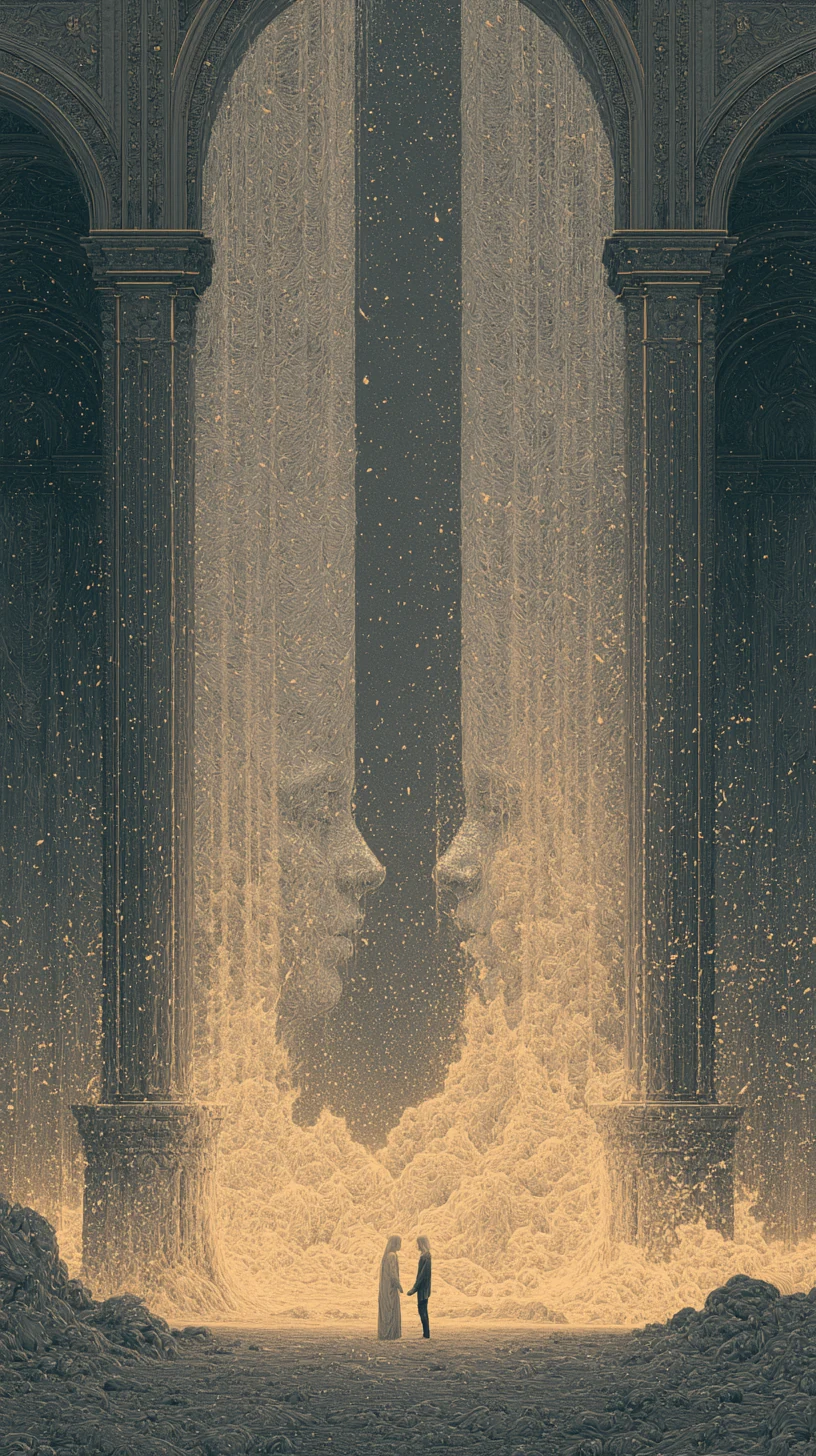
三命通会 describes it as layered hardship, the sound of groaning. The image is not impact but pressure-in-place: the chart meeting itself, an energy doubled where it already sat, producing restriction rather than movement. It is one of the two great repetition-and-clash years, paired against its opposite.
When It Fires
It fires when the annual pillar exactly duplicates a natal pillar. The position struck shapes the weight: the year duplicating the day pillar is the most personal, named 真太岁; the year duplicating the hour pillar is named 转趾杀 and touches late-life and household matters. Duplication of the year pillar stirs the root; of the month pillar, the career structure.
What It Changes
It locks. Where most transits move things, 伏吟 holds them — the doubled pillar produces repetition, stasis, a sense of going over old ground without advancing. Matters stall; the body and mind groan under a weight that does not push but presses. The essence is immobility: the chart pinned to a point it already occupied, unable to move forward by the usual means.
Because the energy is repetition rather than collision, the way through is not force but fundamental change — the stuck note breaks only when something genuinely shifts.
How To Read It
Read it by position and by the chart's condition. The day-pillar duplication, 真太岁, is the most feared and the most personal; the hour-pillar 转趾杀 weighs on the late-life and domestic register. Light cases bring body-mind groaning and stalled affairs; heavier ones bring loss or strain on kin. But the literature also preserves a favorable variant, 君臣庆会: for a chart that is structurally clean and a person of steady virtue, the same repetition becomes a major-use year, the doubling reinforcing strength rather than pinning it.
So the reading turns on whether the doubled pillar is one the chart can bear to repeat. A clean, well-supported chart can convert the held note into consolidation; a strained one feels it as restriction and stall. Never flat — the same duplication reads as reinforcement or as immobility depending on what is being doubled.
Where This Shows Up
A period of this kind feels like running in place. Familiar problems return; progress that seemed possible keeps reverting to where it started; the stretch has a quality of repetition that resists the ordinary push. It is a time more suited to depth than to advance — to going inward, reviewing, and confronting the thing that keeps recurring, rather than forcing forward motion that the period will not grant.
When the chart is strong and clean, the same stillness can become productive: a year of consolidation, of reaffirming a foundation, of the held note resolving into renewed strength. When the chart is strained, it is felt as a stretch of restriction to be endured and understood, where the way out is a real change rather than more effort along the old line.