The Constitution
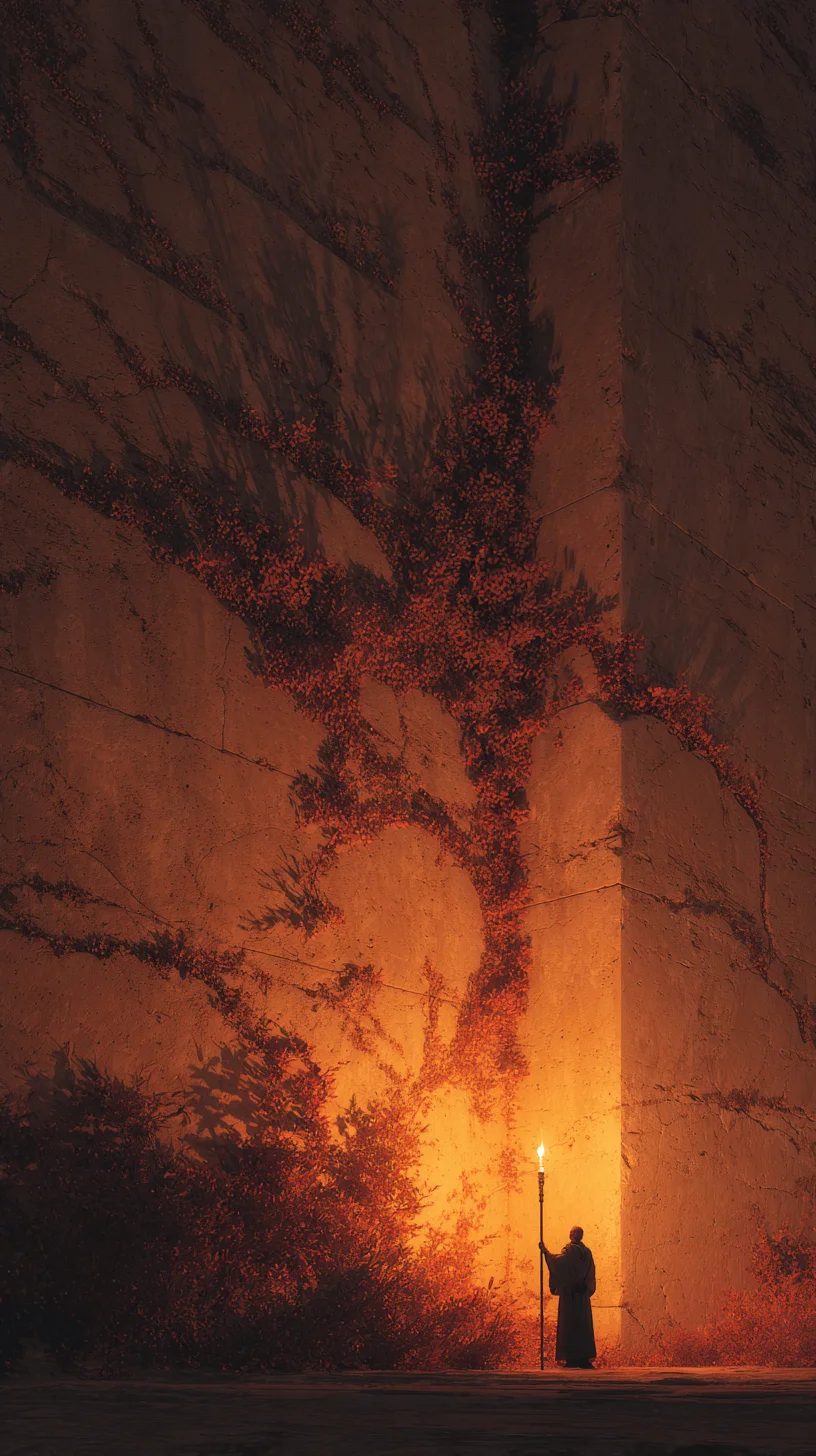
There are people who carry history on their surface. Who accumulate the marks of time and experience in a way that is visible, that tells the story of everything they have been through, that does not pretend to be unmarked when they have been marked. The wall that has stood for centuries shows every century in its surface. This is not decay. It is record.
壁上土 is Wall Earth. The earth formed into a wall: flat, vertical, enduring, and accumulating the marks of everything that has happened against it. This earth is not buried, not moving, not growing: it is fixed and facing outward and absorbing. The wall does not resist being marked. It does not pretend the marks are not there. It simply endures.
The specific quality of this constitution: you carry the record of what you have experienced. The accumulation of what has been against you, what has passed over you, what has been written on you. This is not damage. It is depth. The wall that has been weathered is not weaker than the new wall. In many ways it is stronger: it knows what it has survived.
What You See That Others Don't
You see the record. Where others see the current state of things, you see the history that produced the current state. The marks on the wall tell you what has been here, what has pushed against this surface, what has been trying to get through and what has been kept out.
壁上土 perceives duration and accumulation. You know, from the marks, more about what a situation has been through than anyone who is only reading the current surface. The organisation that has a wall person at its core has someone who remembers every test the organisation has survived. The relationship that has a wall person in it has someone who has kept the full account.
The cost: the wall that keeps everything has a weight. The accumulated record of everything that has been against it is not weightless. The enduring surface endures by absorbing, and absorption is not free.
What Most People Get Wrong About You
They think the marks are weakness. That the weathered surface is less than the new one. That the wall that shows its age is not as strong as the wall that has not yet been tested.
壁上土 knows what the new wall does not know: what it is like to be stood against. The new wall is smooth because it has not yet been tested. The weathered wall is textured because it has. The texture is the record of survival. It is not damage. It is the wall itself.
They have said you carry too much, that you should let the past go, that the marks on the surface are holding you back. Some of them may have seen something real. Not all marks need to be kept. Some can be replastered. The wall that knows which marks to keep and which to smooth is wiser than either the wall that keeps everything or the wall that keeps nothing.
The Pattern You Carry
The wall that absorbs everything eventually reaches a point where the surface cannot hold more.
壁上土 endures and records. The pattern: the same capacity to absorb and to hold the record can become the fullness that leaves no room for new marks. The wall that is completely covered has no unmarked surface. Every new experience lands on top of an existing one, obscuring it.
The chart asks whether the wall has space. Whether the accumulation has been reviewed, with some things smoothed over to make room for what is still coming. The wall that endures must also be maintained. Not erased. Maintained.
Where This Shows Up
You are the institutional memory. The person who has been through the full arc of whatever you are part of and who carries that arc in a way that is available to anyone who takes the time to read the surface. Your experience is the record. Your presence in any situation is the presence of everything the situation has already survived.
In work: you belong in contexts that value history as a resource. The organisation that forgets its own history keeps making the same mistakes. You are the wall that prevents the forgetting. Your value is most legible to the people who understand that what the wall has survived is the most important thing about it.
In relationships: you love with the full weight of the accumulated record. The person who loves a 壁上土 person is in relationship with everything that person has been through, not just the current surface. The challenge is the new: the relationship that is only about the marks cannot grow new marks. Leave space on the wall for what has not happened yet.