What This Is
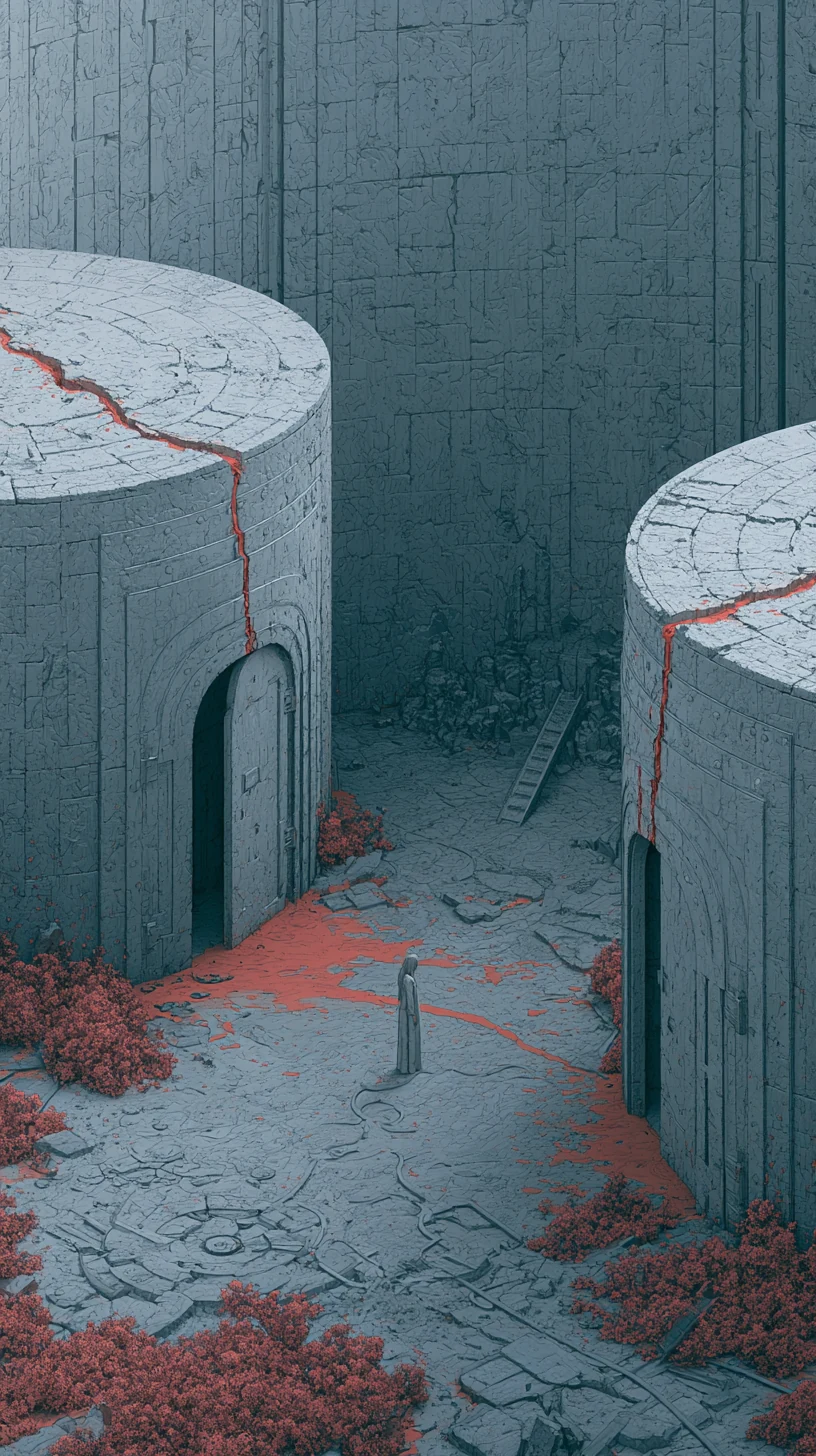
A controlled fissure between two storehouse vaults. 丑 (Ox) and 辰 (Dragon) are both wet-Earth storehouse branches, and the 破 — the Break — between them is one of the six 破 relationships. Unlike a 冲, which throws a storehouse door wide open and releases everything inside at once, a 破 is a weak disturbance: a controlled crack in the vault wall rather than a full opening. The classical rule holds that storehouses open on a clash, not on a break.
So 丑辰破 reads as friction and slow seepage on the two storehouse seats — a fissure, not a release.
When It Fires
It fires when both 丑 and 辰 are present as full branch positions in the chart, not merely as hidden stems. When the break forms, the two storehouse seats are disturbed — but gently, a controlled cracking rather than the decisive opening a clash would bring.
What It Changes
It introduces a slow, controlled leak. Where a clash to a storehouse opens the door and releases its contents in one event, the break only fissures the wall — and the result is friction and gradual seepage on whatever sits on those two wet-Earth vaults. Things stored there are not released cleanly; they are unsettled, leaking slowly, a low-grade disturbance rather than a decisive opening.
The mechanic is universal: a slow, controlled fissure on two storehouse seats. What is being disturbed depends entirely on the individual chart.
How To Read It
Read it in two layers. The universal layer is the mechanic itself — a controlled fissure on two wet-Earth storehouses, weak rather than full, slow seepage rather than release, friction on the vault seats. This holds in any chart.
The chart-specific layer is what is being disturbed. The two storehouses hold fixed hidden stems — 辰 holds 戊乙癸, 丑 holds 己癸辛 — but whether those read as a disturbed wealth-seat, authority-seat, or resource-seat depends on the day master's own Ten-God roles. The same 丑辰破 unsettles different things in different charts. It must be read through the day master rather than assigned a single meaning. Never flat — the mechanic is universal, the meaning is individual.
> TODO (BM): per the source, the specific seat disturbed (wealth/authority/resource) is day-master-dependent and not generalizable; confirm whether the live page should carry a worked day-master example or stay at the universal-mechanic level.
Where This Shows Up
A configuration of this kind is felt as a slow, low-grade disturbance rather than a sharp event — friction on something stored and banked in the chart, a vault that seeps rather than opens, a resource or holding quietly unsettled over time. It does not announce itself the way a clash does; it works as a gradual leak on the two storehouse seats.
Exactly what is disturbed depends on the individual chart, so the lived texture varies — a slowly unsettled wealth-store in one chart, an authority- or resource-store in another. The universal feel is the same: a controlled fissure, friction and seepage on what the storehouses hold, slow rather than decisive, read always through the particular chart it sits in.