The Constitution
There are people who do not change with the season. Who carry the same quality in winter that they carry in summer, who maintain the same direction in scarcity that they maintain in abundance, who have a constancy that is not rigidity but is something more fundamental: a relationship with the core of what they are that the seasons cannot touch.
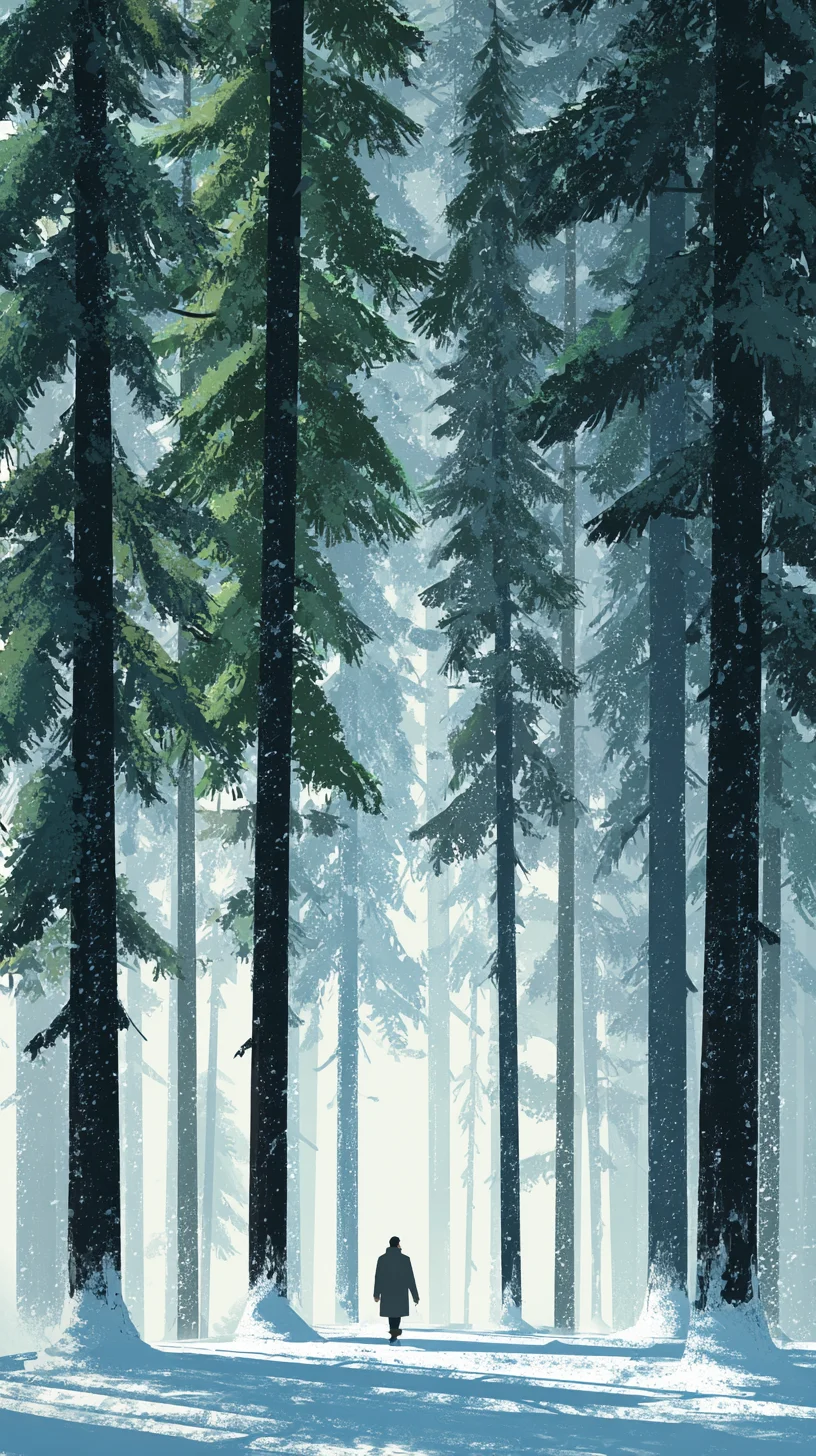
松柏木 is Pine and Cypress Wood. The evergreen trees. The wood that does not drop its needles when the temperature falls, that does not alter its color when the world around it loses its green, that maintains its vitality through the conditions that strip everything else to bare branches. This is the nayin of enduring vitality, constancy through seasons, and the specific form of strength that comes from not requiring the world's conditions to be favorable in order to be fully yourself.
The specific quality of this constitution: you are most yourself under pressure. Not because you are built for difficulty, but because your nature does not depend on ease. The pine in the storm is the pine. The pine in the calm is also the pine. The consistency is not performance. It is constitution.
What You See That Others Don't
You see what persists. Where others track what is changing, you track what is not changing: the underlying reality that continues through the surface transformations, the core truth that remains after the seasonal fluctuations have stripped everything else away.
松柏木 perceives the permanent. You know, with a quiet certainty, what is still there when everything else has been removed. This gives you a kind of stability in turbulent situations that others find either reassuring or unsettling, depending on whether they were looking to the turbulence for permission to abandon something that should not be abandoned.
The cost: the constancy that comes from seeing what persists can make it difficult to release what should be released. Not everything that appears permanent is worth maintaining. The evergreen that holds its needles through winter must know the difference between its own living needles and the dead wood that needs to fall.
What Most People Get Wrong About You
They think the constancy is inflexibility. That because you do not change with the seasons, because your color does not shift with the temperature, you cannot grow or develop or respond to new conditions.
松柏木 grows. The pine grows every year. It simply does not stop being a pine while it is growing. The constancy is the constancy of character, not the constancy of form. The same tree that stands in the same place has put down deeper roots every year. The consistency is not the absence of development. It is development that does not require discontinuity.
They have called you stubborn, unchanging, unable to adapt. What they were encountering was someone who does not need external conditions to be favorable in order to continue being what they are. That is not stubbornness. It is self-possession.
The Pattern You Carry
The tree that stays green through every winter has roots that most trees never develop.
松柏木 endures. The pattern: the capacity for endurance can become the commitment to enduring past the point that endurance is serving you. Staying in the difficult position because staying is what you do. Maintaining the winter posture when spring has arrived and it is time to respond differently. The evergreen must still respond to the seasons. It simply does not lose itself in them.
The chart asks what you are enduring and why. Whether the constancy is in service of something that deserves it or whether it has become a form of loyalty to the difficulty itself.
Where This Shows Up
You are the one who is still there. After the crisis, after the downturn, after the period that drove others away. You are still there, still green, still the same. The person the organisation or the family or the relationship returns to because you are the reference point for what does not change.
In work: you belong in the contexts that require sustained presence and reliability through variable conditions. Long-term projects, institutions, the work that needs someone who will not lose their orientation when conditions become difficult. You are the constant in the equation.
In relationships: you love with a constancy that the people you love come to depend on without always knowing they depend on it. The challenge is communicating the green: the person who is always constant can be taken for granted precisely because the constancy never fails. Make sure the people in your life know that the green costs something to maintain. It is not automatic. It is chosen, every season.